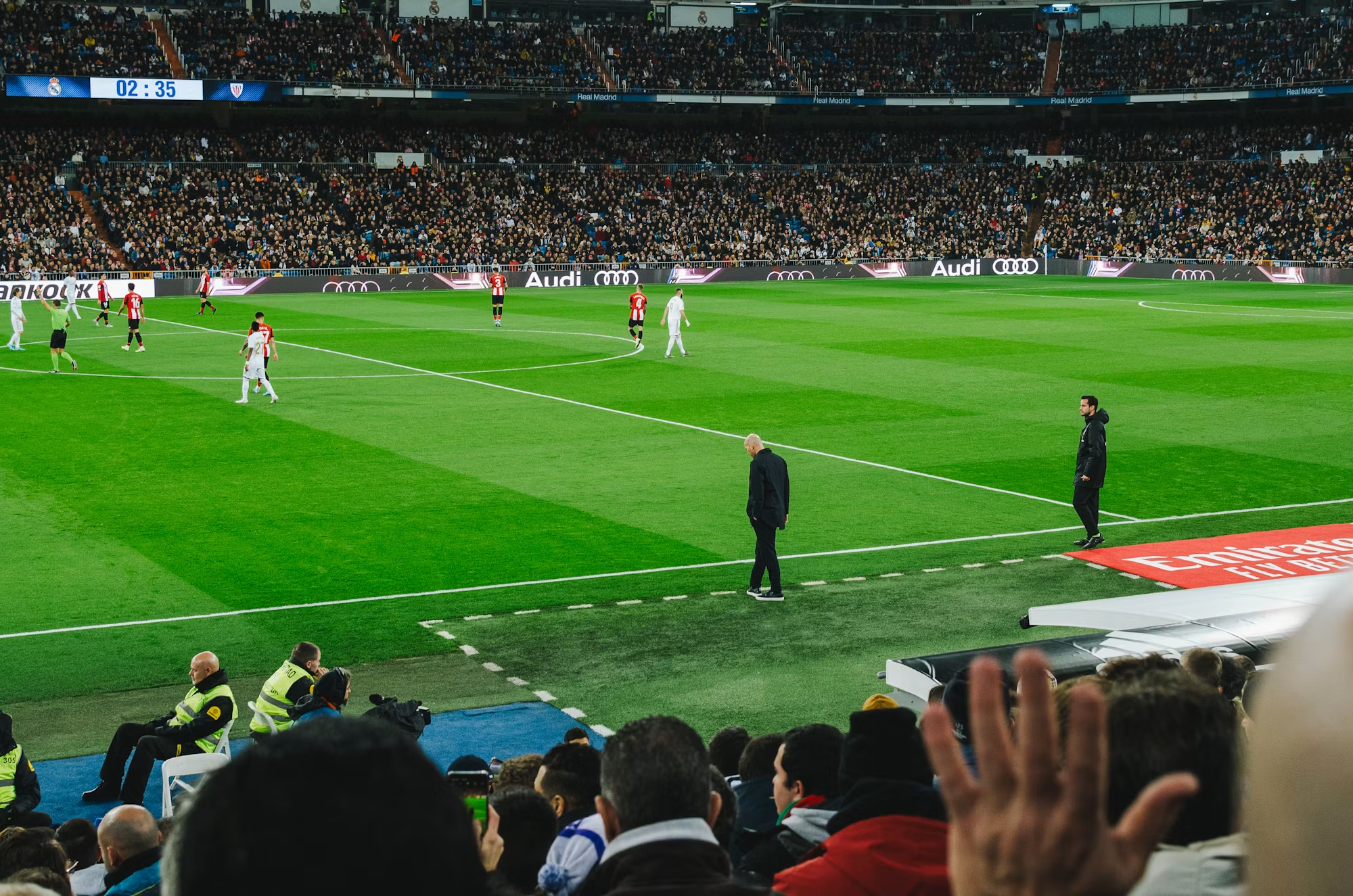
Soccer, often hailed as the beautiful game, is a sport that combines athleticism, strategy, and skill. Mastering the fundamental skills of soccer is crucial for any player aspiring to excel on the field. This article delves into the essential skills required in soccer, breaking down techniques for dribbling, passing, shooting, defending, and more, while providing tips for players to elevate their game. Dribbling is one of the most vital skills in soccer, allowing players to maneuver the ball effectively while navigating through defenders. A successful dribbler combines speed, agility, and close ball control. Techniques such as the step-over, nutmeg, and feint can create space and deceive opponents. For beginners, focusing on keeping the ball close to the feet while practicing changes in direction can significantly improve dribbling ability. As players advance, they can work on incorporating tricks and feints to become more unpredictable on the ball. Regular practice in one-on-one scenarios can help players build confidence and develop their dribbling skills in game-like situations. Passing is another fundamental skill that dictates the flow of the game. Accurate passing can maintain possession and create scoring opportunities. The two primary types of passes are short passes and long passes, each serving a distinct purpose. Short passes are often used in quick combinations to break through tight defenses, while long passes can switch the play and exploit space on the flanks. Players should focus on their body positioning, ensuring they face their target when making a pass. Practicing different passing techniques, such as the inside of the foot for accuracy and the laces for distance, can enhance overall passing ability. Additionally, players can improve their passing by working on their vision, anticipating teammates’ movements and identifying open spaces on the field. Shooting is arguably the most exciting aspect of soccer, as it leads to goal-scoring opportunities. There are various shooting techniques, including instep drives, volleys, and chips. The instep drive is the most common method, utilizing the laces of the shoe for power and accuracy. When shooting, players should focus on their non-kicking foot placement, ensuring it points towards the target. Regular practice, both in individual training and small-sided games, can help players refine their shooting technique. Additionally, practicing shooting from different angles and distances can prepare players for various game situations. Defending is often an overlooked aspect of soccer, yet it is equally crucial for team success. A strong defender must possess good positioning, anticipation, and the ability to read the game. Techniques such as tackling, intercepting passes, and marking opponents are essential skills for defenders. Players should work on their footwork, ensuring they remain balanced and ready to react to the attacking player’s movements. Practicing one-on-one defending scenarios can help players build confidence in their ability to challenge opponents effectively. Understanding the importance of communication with teammates is also vital, as cohesive defending often relies on teamwork and organization. Another important skill in soccer is heading, which can be used both defensively and offensively. Mastering the art of heading involves proper technique to ensure player safety and effectiveness. Players should focus on timing their jumps and using their forehead to make contact with the ball. Heading drills can be practiced with partners or against a wall to improve accuracy and power. Players should also work on their positioning to capitalize on crosses and set pieces, as these opportunities can lead to crucial goals. Set pieces, including free kicks and corners, require specific skills and teamwork. Executing set pieces effectively can lead to goal-scoring opportunities, making it essential for teams to practice these scenarios. Players should develop a variety of set-piece routines, incorporating movement, timing, and accurate delivery. Practicing these situations in training allows players to understand their roles and responsibilities during matches. Additionally, coaches should emphasize the importance of communication and organization during set pieces to maximize their effectiveness. Fitness and conditioning play a significant role in a player’s ability to perform skills effectively. Soccer requires a combination of endurance, strength, speed, and agility. Incorporating fitness training into practice sessions can help players enhance their overall performance. Exercises such as interval sprints, agility drills, and strength training can improve players’ physical attributes, allowing them to execute skills with greater effectiveness. Proper nutrition and hydration are also vital for maintaining peak performance, as they impact energy levels and recovery. Mental preparation is equally important in soccer. Developing a positive mindset, resilience, and focus can significantly influence a player’s performance on the field. Visualization techniques, where players mentally rehearse skills and game scenarios, can enhance confidence and reduce anxiety during matches. Setting achievable goals and reflecting on performances can also contribute to a player’s mental growth. In addition to individual skills, teamwork and communication are essential elements of soccer. Players must work together to create scoring opportunities and defend against opponents. Practicing small-sided games and team drills can foster better understanding and cooperation among players. Emphasizing the importance of communicating on the field, such as calling for the ball or providing defensive support, can improve overall team performance. Coaches play a crucial role in skill development by providing constructive feedback and creating a positive learning environment. By encouraging players to embrace challenges and learn from mistakes, coaches can help them develop their skills effectively. It is essential for coaches to tailor their training sessions to meet the needs of their players, providing opportunities for skill development, tactical understanding, and physical conditioning. In conclusion, mastering the essential skills of soccer requires dedication, practice, and a willingness to learn. From dribbling and passing to shooting and defending, each skill contributes to a player’s overall performance on the field. By focusing on technique, fitness, and teamwork, players can elevate their game and enhance their enjoyment of the beautiful game. Soccer is a lifelong journey of improvement, and embracing this journey will lead to success both individually and as part of a team.
The Art of Soccer Skills: Mastering Techniques for Success