Hockey is a fast-paced and dynamic sport that requires a unique blend of skills and techniques for success. Whether on the ice or the field, players must master various abilities to navigate the game effectively. This article delves into the essential skills and techniques that define hockey, providing insights into how players can develop their prowess and contribute to their teams.
Skating: The Foundation of Ice Hockey
In ice hockey, skating is the foundational skill that every player must master. Efficient skating not only enables players to move swiftly across the ice but also allows them to execute maneuvers, maintain balance, and engage in physical play. Proper skating technique involves a combination of powerful strides, quick stops, and agile turns. Players must focus on their posture, weight distribution, and blade angle to maximize their speed and control.
Developing skating skills begins with basic drills, such as forward and backward skating, stopping, and edge work. Coaches often emphasize the importance of using the inside and outside edges of the skates for sharp turns and quick directional changes. As players gain confidence, they can progress to more advanced techniques, including crossovers and transitions, which are crucial during gameplay.
Stickhandling: Control and Precision
Stickhandling is another vital skill in both ice and field hockey. It involves manipulating the puck or ball with the stick while maintaining control and protecting it from opponents. Effective stickhandling requires a combination of hand-eye coordination, quick reflexes, and spatial awareness. Players must learn to keep their heads up while handling the puck or ball, allowing them to read the game and make informed decisions.
Drills focused on stickhandling often include cone weaving, puck control exercises, and one-on-one scenarios. Players can enhance their dexterity and creativity through these drills, enabling them to navigate through defenders and create scoring opportunities. Mastering stickhandling not only boosts individual performance but also enhances overall team play by fostering better passing and shooting opportunities.
Passing: The Art of Teamwork
Passing is the cornerstone of teamwork in hockey. Effective passing allows players to maintain possession, create scoring chances, and dictate the tempo of the game. Players must master various passing techniques, including forehand, backhand, saucer, and no-look passes. Each type of pass serves different purposes and can be crucial in different game situations.
To improve passing skills, players can engage in drills that simulate game scenarios, such as passing under pressure, utilizing give-and-go techniques, and practicing accuracy over varying distances. Communication is key during these drills, as players must develop an understanding of their teammates’ positioning and intentions. A well-timed pass can turn a defensive play into a scoring opportunity, emphasizing the importance of precision and timing in this essential skill.
Shooting: Finding the Back of the Net
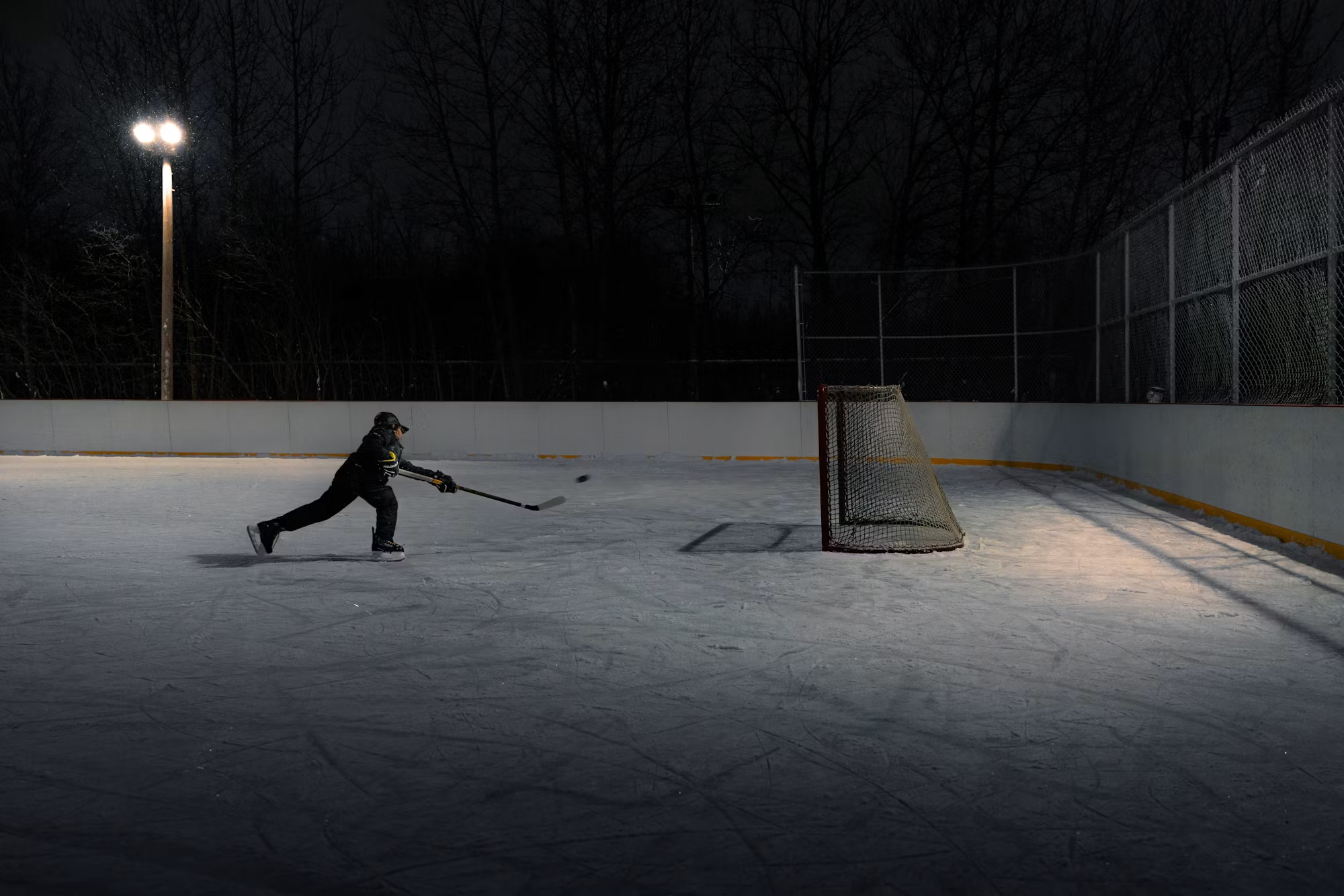
Shooting is arguably the most exciting aspect of hockey, as it often leads to goals and highlights. A player’s shooting technique can significantly impact their effectiveness in scoring. Different types of shots, such as wrist shots, slap shots, and snap shots, require distinct techniques and body mechanics. Each shot type is useful in various situations, and players must learn to choose the appropriate shot based on their position, distance from the goal, and defensive pressure.
Practicing shooting drills helps players refine their technique and increase their shot power and accuracy. Target practice, shooting under pressure, and situational drills where players must react quickly can all contribute to a player’s ability to score. The mental aspect of shooting, including confidence and decision-making, is equally important, as players must remain composed during high-pressure situations.
Goaltending: The Last Line of Defense
In ice hockey, goaltending is a specialized position that requires a unique set of skills and techniques. Goalies must possess exceptional reflexes, agility, and positional awareness to protect the net. Key techniques include proper stance, butterfly save technique, and rebound control. Goalies must also communicate effectively with their defense to ensure a cohesive team effort in preventing scoring opportunities.
Training for goalies often involves specific drills focused on reaction time, lateral movement, and handling pucks. Video analysis can also be beneficial, as goalies can review their performances, identify areas for improvement, and develop strategies to counter opposing shooters. A strong goaltender can be the difference between a win and a loss, highlighting the importance of this position in hockey.
Defensive Tactics: Mastering the Art of Defense
Defensive skills are critical in both ice and field hockey. Players must learn to position themselves effectively, anticipate opponents’ movements, and utilize techniques such as body positioning and stick checks. Good defense involves not only stopping the opposing players but also creating opportunities for turnovers and transitions to offense.
Drills focusing on defensive tactics include one-on-one scenarios, positioning drills, and practicing breakouts. Players should develop an understanding of different defensive strategies, such as man-to-man and zone defense, which can be tailored to their team’s strengths and the opposing team’s weaknesses. A well-organized defense can frustrate opponents and lead to successful counter-attacks.
Tactical Strategies: Understanding the Game
Beyond individual skills, understanding tactical strategies is essential for success in hockey. Players must be aware of their team’s game plan, including offensive and defensive strategies, line changes, and situational plays. Developing a strong hockey IQ involves studying the game, learning from coaches, and analyzing opponents’ tendencies.
Team drills that simulate game situations allow players to practice these strategies in real-time. Players must also develop their ability to read the game and make quick decisions, which can significantly impact the outcome. A cohesive understanding of tactics fosters better communication and teamwork, ultimately enhancing overall performance.
Conclusion
Mastering the skills and techniques of hockey is an ongoing journey that requires dedication, practice, and a willingness to learn. From skating and stickhandling to shooting and defensive tactics, each aspect plays a vital role in a player’s development and the team’s success. By focusing on these essential skills, players can enhance their performance, contribute to their teams, and enjoy the beautiful game of hockey to its fullest. As the sport continues to evolve, embracing these fundamentals will remain crucial for aspiring athletes at every level.